
Natural Hair Regrowth with Bioscor
Hair loss can be distressing for many people. With more than 30 years of clinical experience, we provide individualised, medically-supervised assessment and clinically-informed management of various types of hair loss. Our approach focuses on scalp and follicle health, as well as identifying any underlying conditions that may be impacting healthy hair growth.
Our Melbourne-based Hair Regrowth Clinic offers a personalised treatment plan aimed at helping you maintain existing hair and improve the appearance of density and volume over time. Outcomes vary between individuals and depend on the underlying cause of hair loss (e.g. androgenetic alopecia), scalp condition, and adherence to the treatment plan.



Our Results
Some people notice gradual changes over several months as part of ongoing care. Others may take longer or need plan adjustments. Progress depends on factors such as age, diagnosis and the type/severity of hair loss, scalp condition, individual responsiveness to treatment, adherence and general health. Because follicular miniaturisation occurs over many years, improving the appearance of density, volume and hair fibre strength is typically a gradual process. Acting early may increase the likelihood of preserving density and slowing further thinning; for some people it may also support the appearance of thicker, previously miniaturised hairs.
Individual results vary.
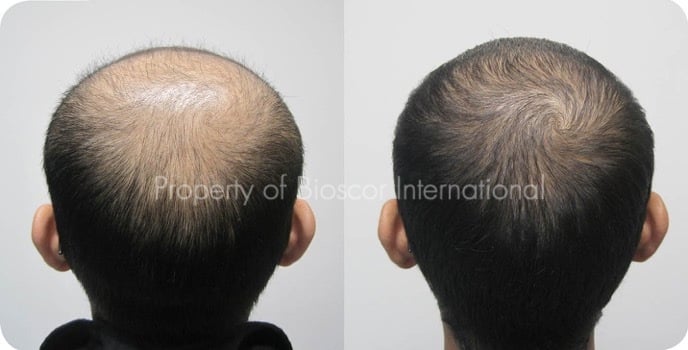
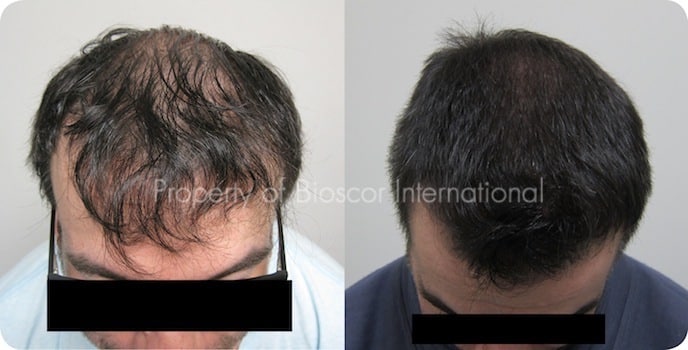
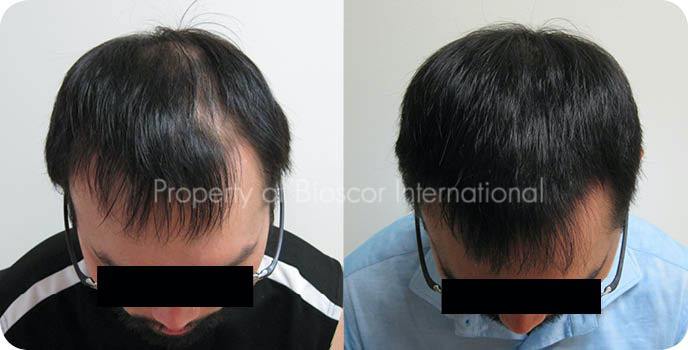
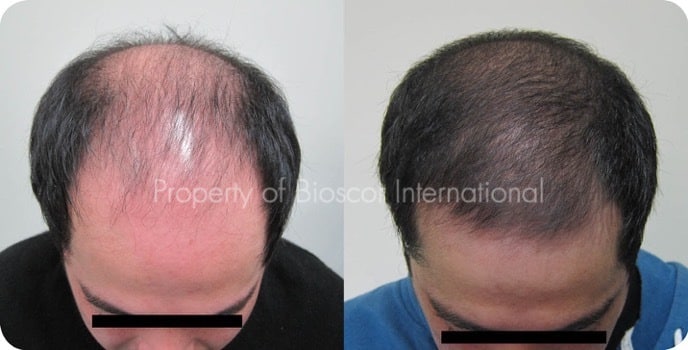
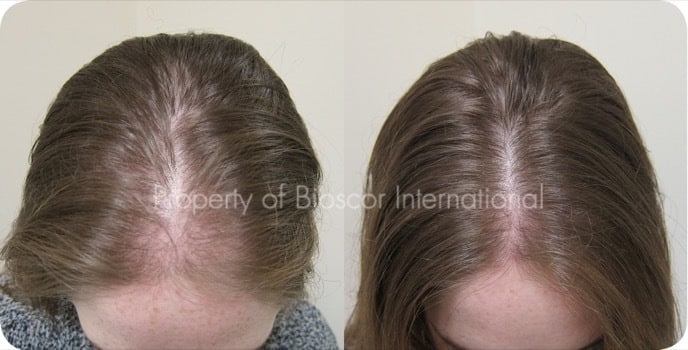
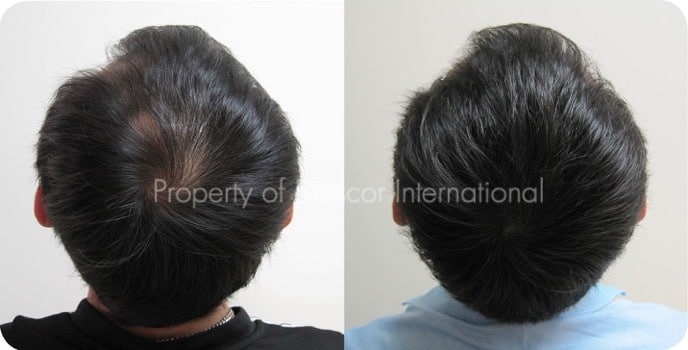
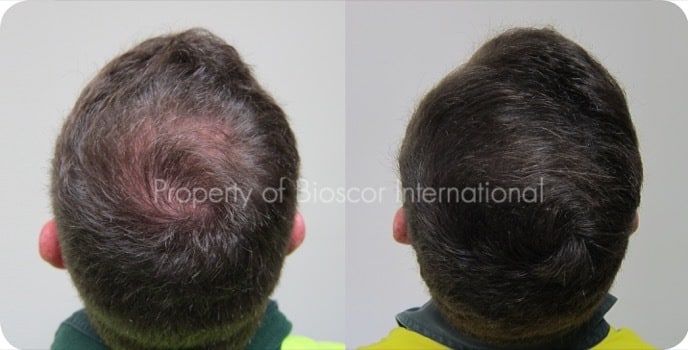
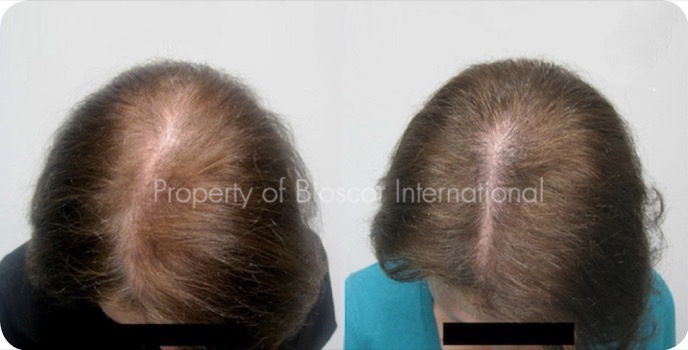
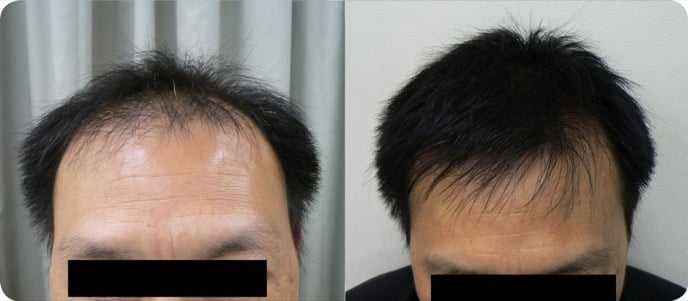
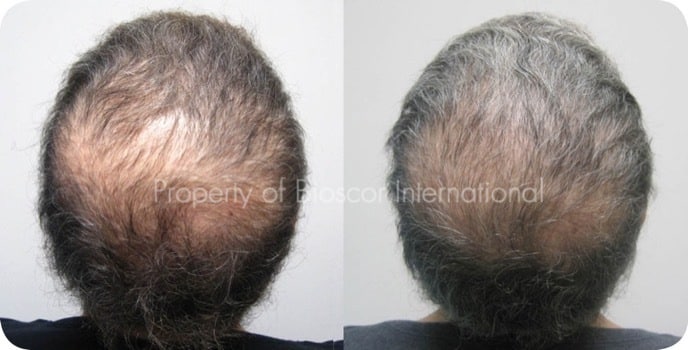
*Patient images are provided for illustration; lighting, angle and duration may differ. Individual results vary.

Frequently Asked Questions
Androgenetic Alopecia, also known as male pattern hair loss, is the most common form of hair loss accounting for 95% of hair loss in men. Female pattern hair loss is the preferred term for Androgenetic Alopecia in females, and affects as many as 12% of females aged from 20 to 29 years, and over 50% for women over the age of 80.
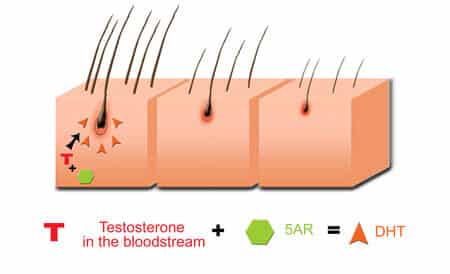
As the name suggests, Androgenetic Alopecia involves the action of androgens (male sex hormones), specifically the hormone DHT. Individuals with pattern hair loss have an increased sensitivity to DHT. DHT binds onto susceptible hair follicles, causing them to shrink. Over time this impacts the hair growth cycle where hair starts to thin, shorten and eventually stop growing.
See this page for more information
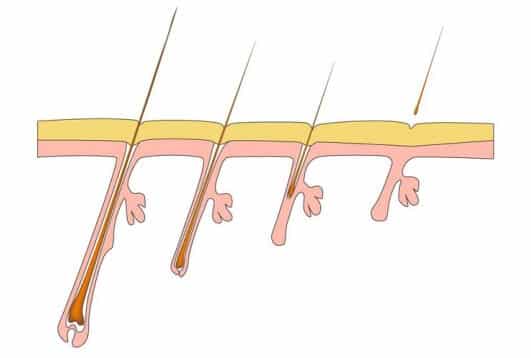
It is normal to shed between 50 to 100 hairs per day. This is because of the hair’s growth cycle, which consists of 3 phases: anagen, catagen and telogen. The anagen phase is the growth phase of the hair in which the hair is actively growing. This phase usually lasts 2 to 7 years, and normally 85-90% of scalp hairs are in this phase at any given time. The catagen phase is known as the transition phase in which hair shaft production is completed. The telogen phase, otherwise known as the rest phase, is the last phase of the growth cycle. In this phase, a club hair is fully formed resulting in a hard, white and dry material at the root and the hair is eventually shed from the scalp.
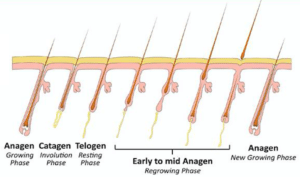
Those with Androgenetic Alopecia, hair shedding is in excess of 100 hairs per day, as follicular miniaturisation causes the hair’s growth cycle to become progressively shorter. This results in significantly less hairs in the anagen phase at any given time, which is why hair shedding is more frequent in those with Androgenetic Alopecia.
There are several evidence-supported approaches that may help manage hair loss. Because causes and patterns differ, there is no one-size-fits-all plan. After assessing your diagnosis, medical history, scalp and follicle health, we design an individualised care plan that may combine medical options (discussed with a doctor and, where appropriate, prescription-only items after consultation) with supportive scalp and hair care. Our goal is to help you maintain existing hair and, for some people, improve the appearance of density and volume over time. Suitability and response vary from person to person, and any potential benefits, uncertainties and risks are discussed before you decide.
Note: Prescription-only medicines are not advertised to the public and are only considered after a medical consultation. Individual results and timelines vary.
No — we don’t guarantee results, because hair biology differs for each person. Your diagnosis, duration and severity of change, genetics, scalp/follicle status, and treatment adherence all influence response. (In scarring alopecias or areas without viable follicles, regrowth is unlikely.)
But while we can’t promise an outcome, what we can do is take an evidence-based approach:
- Make an accurate diagnosis (history, scalp examination and, when indicated, trichoscopy) so we’re treating the right problem.
- Design an individualised, medically supervised plan grounded in current evidence, explaining potential benefits, uncertainties and risks, and reviewing/adjusting it over time.
- Discuss prescription-only options after a consultation where clinically appropriate (we don’t advertise these to the public).
- Support day-to-day hair and scalp care—appropriate shampoo/conditioner, leave-in serums, gentle scalp massage, and nutrition to nourish fibre strength.
Many people notice gradual changes over months—such as stabilising thinning or improving the appearance of density and volume—while others may need more time or plan adjustments. We’ll set realistic milestones, monitor progress (photos/density checks), and refine your plan together.
All medical treatments carry risks. Suitability, uncertainties and expected timelines are discussed with your doctor. Individual results vary.
There’s no fixed timeline—it depends on your diagnosis and goals. For ongoing, genetic pattern hair loss, many people benefit from a maintenance plan: when support stops, hair often follows its original pattern again over time. That said, maintenance doesn’t have to be one-size-fits-all. We’ll review your progress and can adjust, step-down or simplify your plan as your priorities change.
For non-genetic causes (e.g., temporary shedding after illness, nutrition or hormonal factors), duration typically relates to how quickly contributing factors are addressed. Some people regain the appearance of density and volume as the cycle stabilises; others may need longer monitoring.
Bottom line: We’ll tailor duration to you. If you’re happy with your progress, we can plan a maintenance strategy; if life priorities change, we can modify the routine while explaining likely trade-offs.
All medical treatments carry risks. Suitability, uncertainties and expected timelines are discussed with your doctor. Individual results vary.
Bulk billing is available for eligible patients holding a valid Medicare card, provided the consultation is considered clinically necessary by the doctor. Hair loss is a recognised medical condition — particularly where assessment, diagnosis, and discussion of treatment options are involved.
In-person appointments are generally bulk billed. Video telehealth appointments may also be bulk billed, depending on Medicare eligibility. Phone consultations can only be bulk billed if you’ve had a face-to-face visit with our GP in the past 12 months, in line with Medicare rules.
If you’re unsure, our team is happy to guide you — but in most cases, bulk billing is available.

*Bulk billing is subject to Medicare eligibility and clinical criteria. Fees apply where Medicare does not apply or where eligibility requirements are not met. Refer to our FAQ section for clarification.